
 Русский
 Français
 Chinese
DCRT-200: modern solution for diagnostics and condition monitoring of SF6 circuit breaker arcing contacts
With growing safety and reliability requirements for power facilities, equipment manufacturers are striving to offer modern solutions that help specialists prevent emergencies at their facilities.
A new development from SKB EP in the field of high-voltage circuit breaker monitoring and diagnostics, the DCRT-200, deserves special attention. It is designed to determine the technical condition of the arcing contacts in SF6 circuit breakers.
High-voltage SF6 circuit breakers are widely used in power supply systems. Their design includes two types of contacts: the main contact, through which current flows during normal operation, and the arcing contact, which is directly responsible for arc extinguishing during high-voltage circuit breaker switching in normal and emergency modes.
The arcing contact is subject to the greatest wear, especially when short circuits occur. Its tip is made of refractory metal to withstand the arcing process, but over time, this contact wears out and shortens, and its surface erodes. Once it reaches a certain length, the switch will no longer be able to perform its primary function, which can lead to emergency situations.
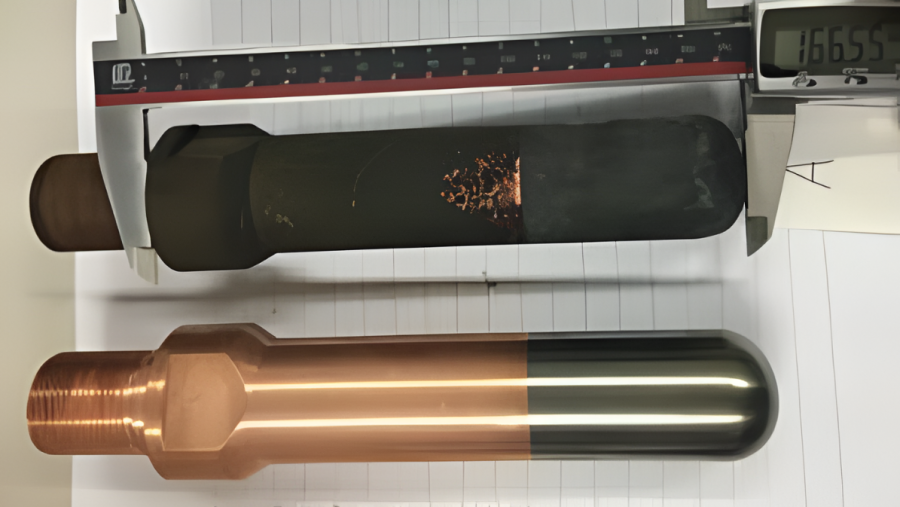
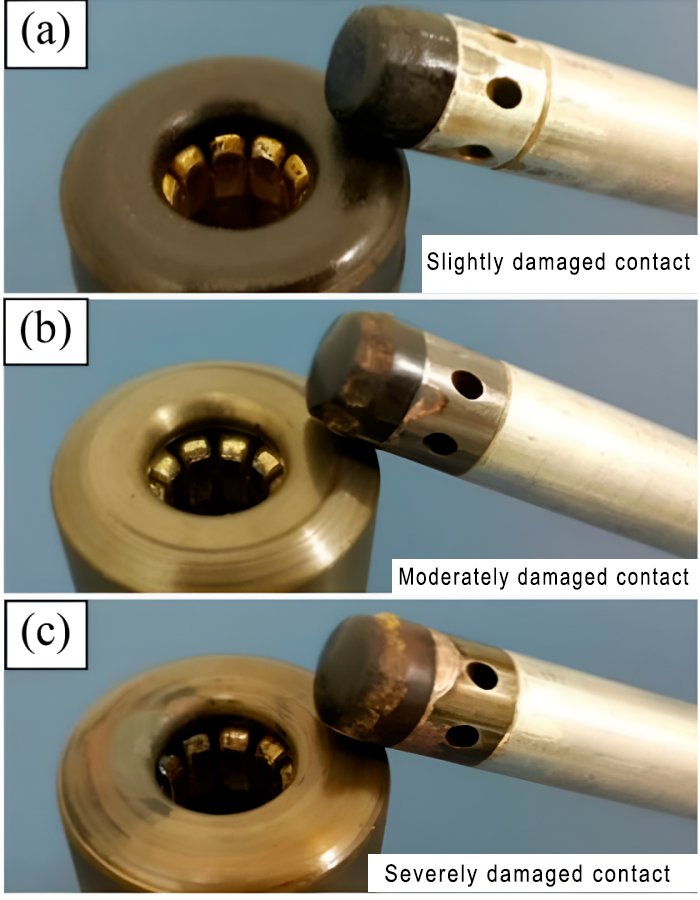
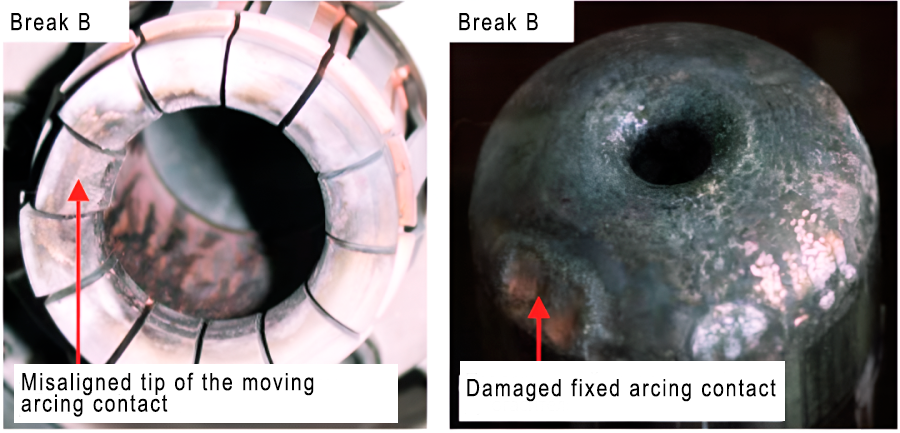
Despite the fact that SF6 circuit breakers are designed for long-term operation (up to 30 years), Russian and foreign manufacturers (ABB, SIEMENS, AREVA, UETM, ZETO and others) recommend regularly monitoring the condition of arcing contacts during each maintenance, in order to promptly detect wear and tear and prevent emergency situations.
Diagnostics of arcing contact consists of measuring its remaining length, which allows determining the degree of wear.
There are two main methods of diagnostics:
- The first method is mechanical. This involves disassembling the circuit breaker pole and measuring the contact length. This method is quite labor-intensive, as disassembling the circuit breaker chamber requires evacuating the SF6 gas, removing the arc extinguish chamber, and disassembling the chamber itself before measuring the arcing contact.
- The second one is dynamic contact resistance measurement (DCRM). This involves simultaneously measuring the resistance and travel of the contact. Since the arcing contact has a higher ohmic resistance than the main contact, this difference can be used to determine the length of the arcing contact. This method allows for a graphic determination of the arcing contact length without disassembling the circuit breaker, allowing to determine whether maintenance is needed. This measurement method is the preferred one, as it does not require circuit breaker disassembly and can be performed as part of routine testing.
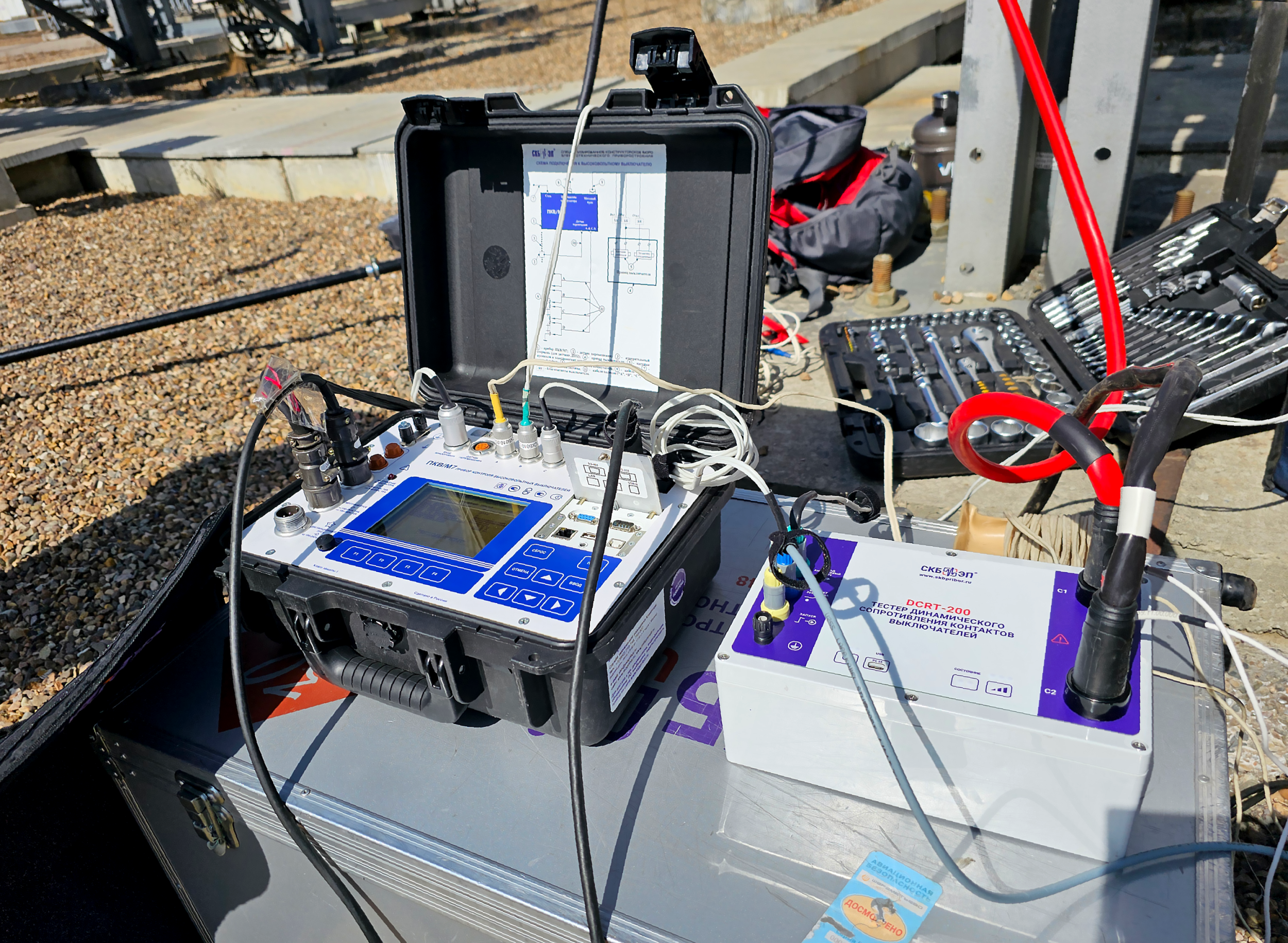
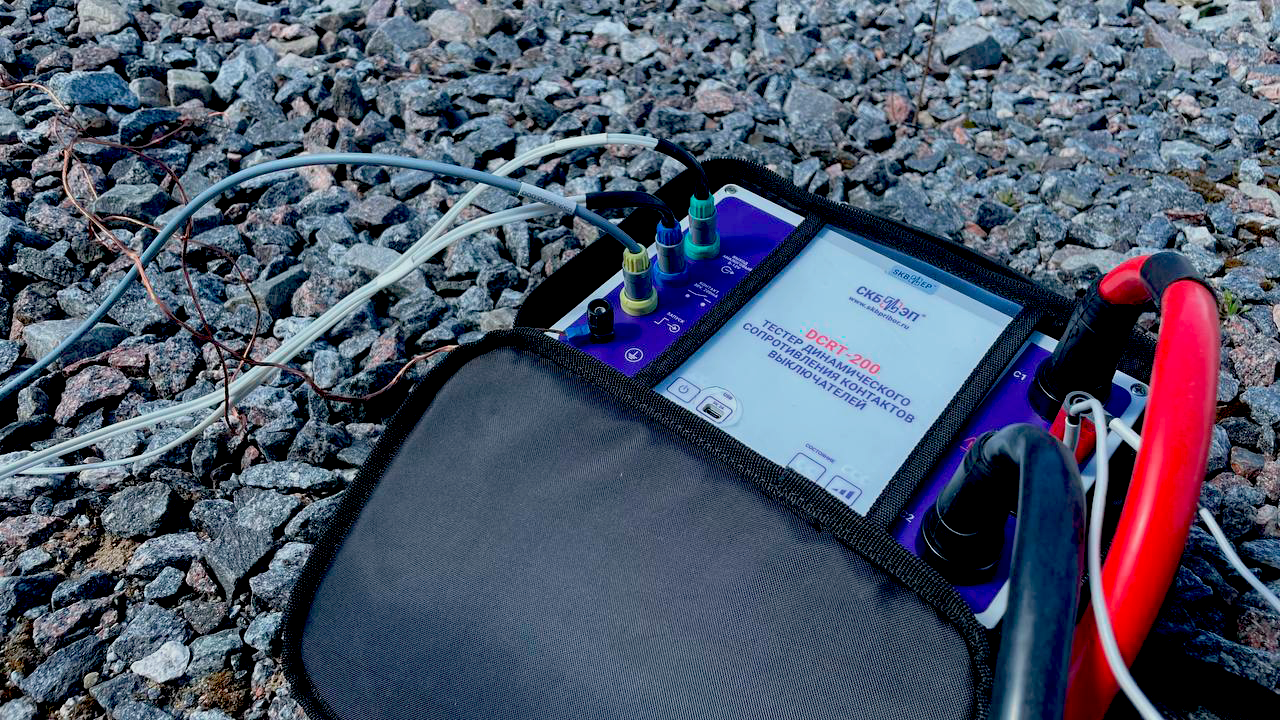
In order to implement the second method, the SKB EP company developed the DCRT-200 instrument which allows measuring dynamic resistance of the arcing contact by non-demountable method (DCRM method) without intervention into the operation of the circuit breaker drive and disassembly of the arc extinguish chamber. Measurements are carried out during a standard breaker opening operation, with the breaker disconnected from the live voltage.
The key capabilities of DCRT-200 include assessing the remaining length of the arcing contact refractory head, determining the surface condition and erosion of the socket part of the arcing contact. The DCRT-200 can also determine the surface condition, including erosion, of both the moving and fixed parts of the main contact.
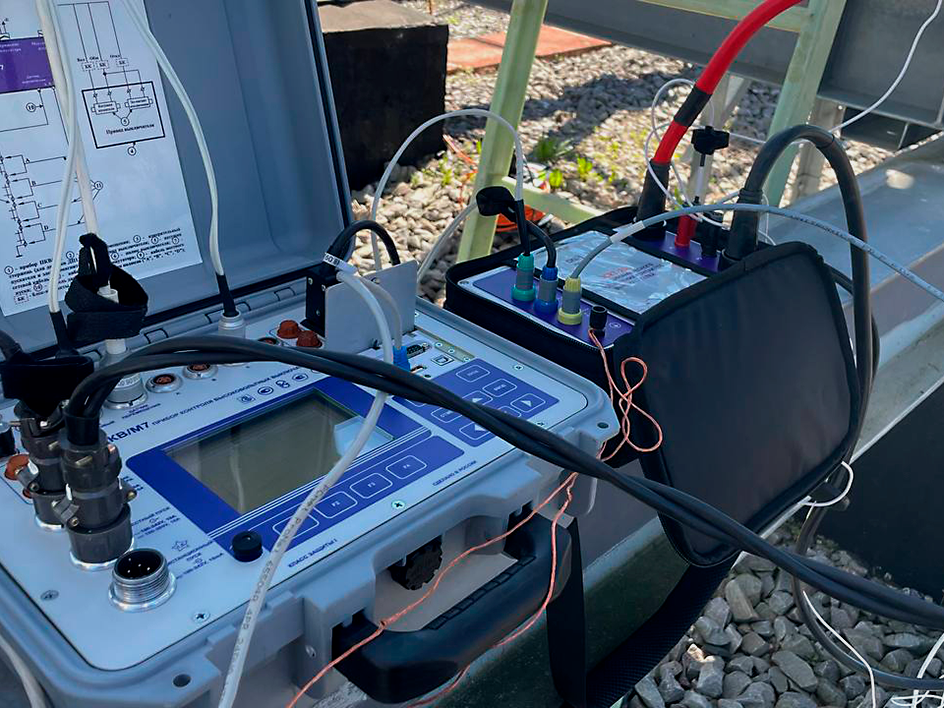
The DCRT-200 instrument complements and expands the scope of use of PKV/M7 and PKV/U3 instruments manufactured by SKB EP. When used together, contact travel data is obtained from the PKV instruments, while resistance data is transmitted from the DCRT-200, allowing the resistance graph to be superimposed on the travel graph and, accordingly, the arcing contact length to be determined. DCRT-200 does not have its own display, so all graphical measurements are transmitted to the PKV/M7 or directly to a computer when used together with the PKV/U3.
Trial operation
The SKB EP professionals carried out measurements before and after the tests of high-voltage SF6 circuit breaker, recording the performance curves of the main and arcing contacts. Figures 1 and 2 show the measurement results before and after seven short-circuit current breaking capacity tests, each with a maximum of 40 kA. The blue graph shows the resistance versus time (this indicates when the arcing contact begins to operate). The orange graph shows the travel versus time.
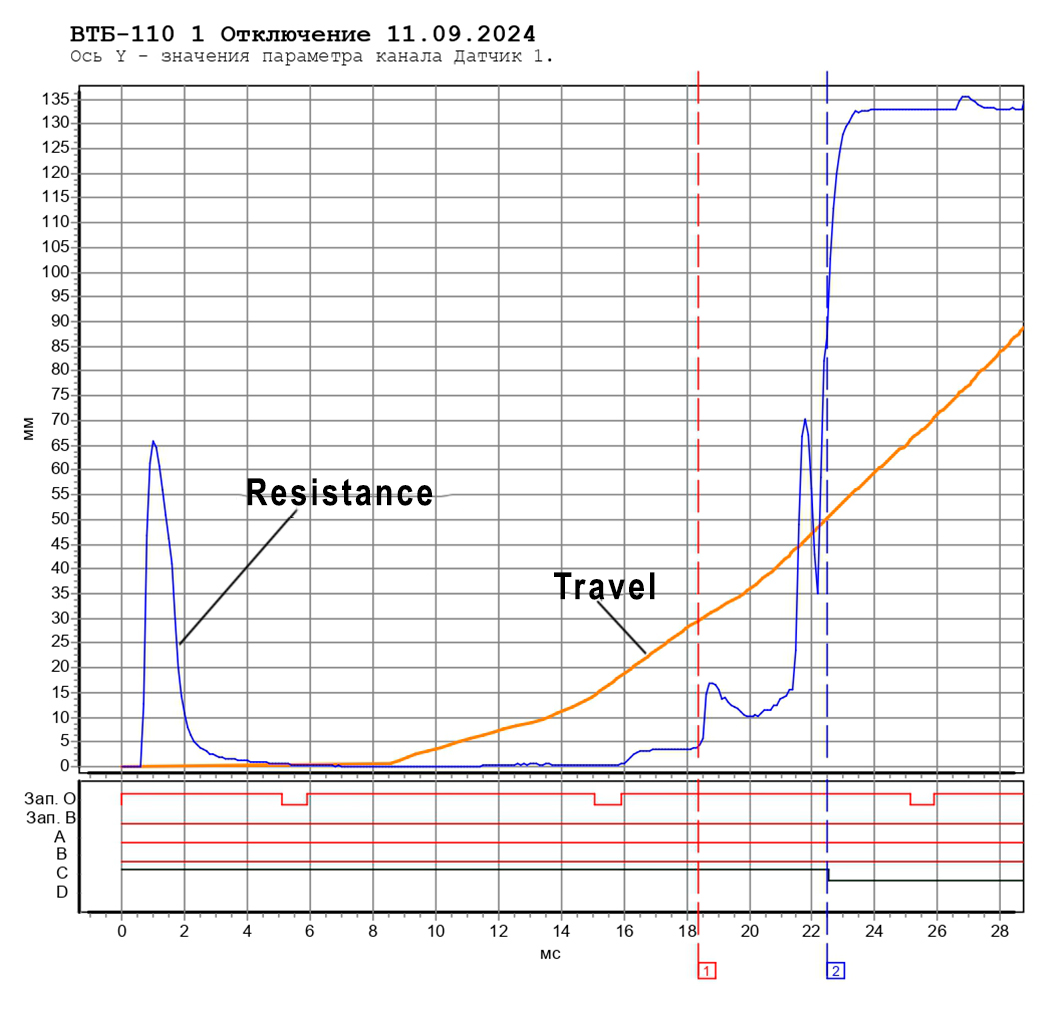
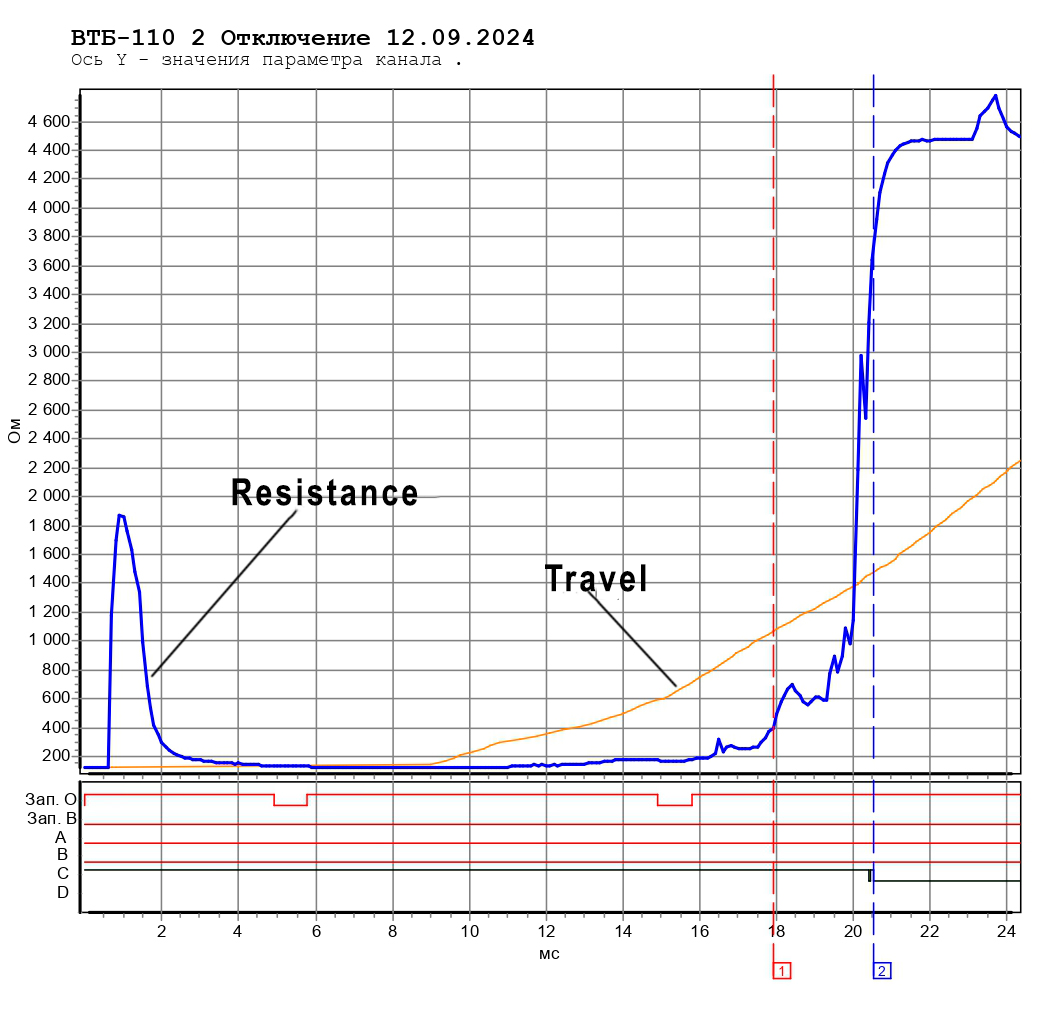
It is evident that the arcing contact decreased by approximately half after testing. This type of diagnostics, especially through graphical analysis, allows one to assess the condition of arcing contacts without disassembling the arc extinguishing chamber. This suggests that the demonstrated method can significantly reduce the time and cost required for such diagnostics and extend the service life of a circuit breaker.
The DCRT-200 instrument manufactured by SKB EP is a modern solution for diagnosing and monitoring the condition of arcing contacts in SF6 circuit breakers. This instrument enables professionals to assess contact conditions reliably without disassembling the equipment, significantly reducing time and resource costs, and enhancing the overall safety and reliability of power facilities.